Sustainable Quality Solutions for a Modern Home
0

Category: Solar Water

  • Home
  • Category: Solar Water
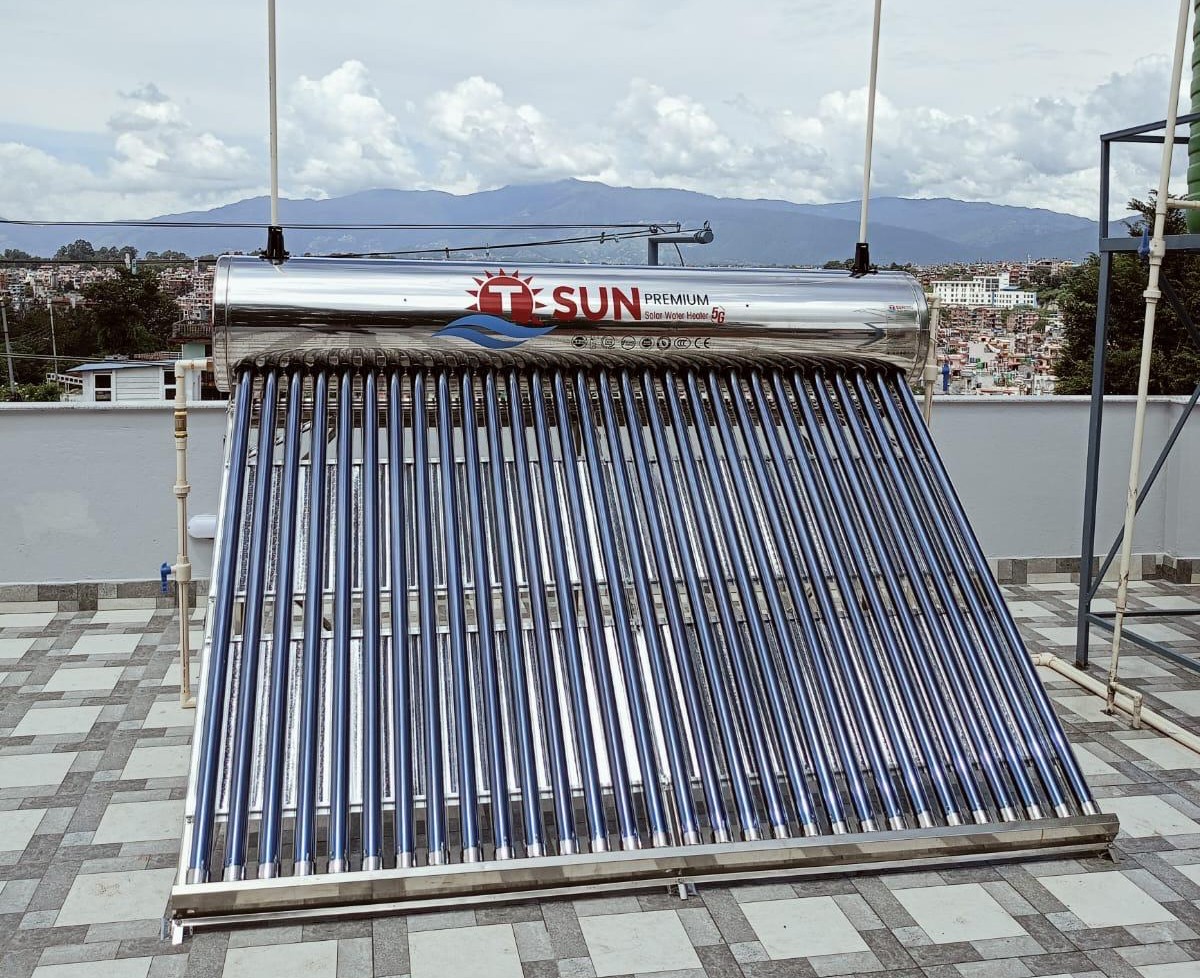
solar water heater installation in Kathmandu

Solar Water Heater Installation in Kathmandu – Residential Project Case Study & Cost Guide

As energy costs rise and homeowners seek sustainable alternatives, solar water heaters have become one of the most practical renewable energy solutions for Kathmandu homes. With abundant sunlight, increasing electricity demand, and growing awareness of eco-friendly living, solar water heating is no longer a luxury β€” it is a smart investment.

This article presents a realistic residential project case study of a solar water heater installation in Kathmandu, explaining the client’s problem, system design, installation process, cost, challenges, and long-term benefits.

solar water heater installation in Kathmandu

Project Overview

πŸ“ Location

Kathmandu Valley (Residential Area)

🏠 Property Type

Independent residential house (2.5 floors)

πŸ‘¨β€πŸ‘©β€πŸ‘§β€πŸ‘¦ Family Size

5 members

🚿 Hot Water Usage

  • Daily bathing
  • Kitchen use
  • Winter-season demand increase

πŸ”₯ Previous System

Electric geyser (high electricity consumption)

Client’s Problem & Requirements

The homeowner approached Multi Power Solution with the following concerns:

Key Issues

  • High electricity bills during winter
  • Frequent power fluctuations
  • Limited hot water during peak hours
  • Desire for an eco-friendly solution
  • Low maintenance preference

Client Goals

βœ… Reduce electricity cost
βœ… Ensure continuous hot water supply
βœ… Use renewable energy
βœ… Long-term reliable solution

Why Solar Water Heater Was Recommended

After a site inspection and usage analysis, a solar water heating system was identified as the most suitable solution because:

  • Kathmandu receives sufficient sunlight year-round
  • Rooftop space was available
  • Family hot-water demand was consistent
  • Payback period was attractive (3–5 years)
  • Minimal maintenance required

System Design & Capacity Selection

Selected System Type

Pressurized Solar Water Heater System

Capacity Chosen

300 Liters

Why 300 Liters?

  • Suitable for 4–6 family members
  • Handles winter demand efficiently
  • Supports simultaneous usage
  • Future-proof for increased use

Main Components Installed

  • High-efficiency solar collector panels
  • Insulated stainless steel storage tank
  • Pressure-resistant piping
  • Temperature & pressure safety valve
  • Backup electric heating option (optional)
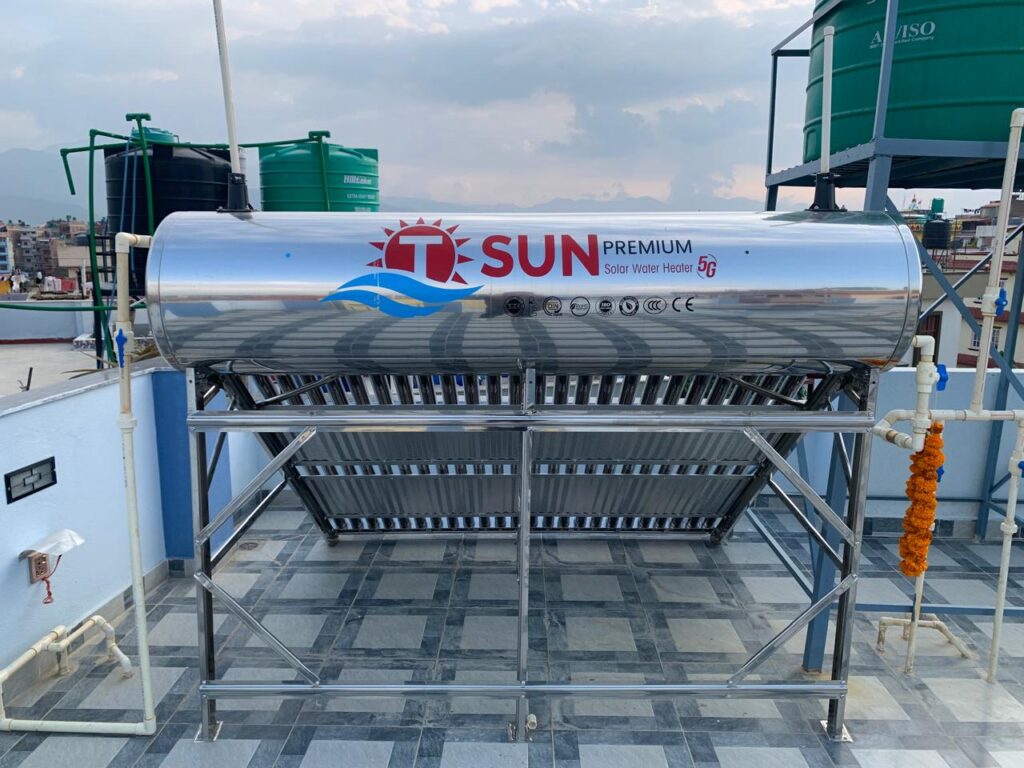
solar water heater installation in Kathmandu

Installation Process (Step-by-Step)

1. Site Survey & Roof Assessment

  • Roof direction and tilt evaluated
  • Shadow-free area identified
  • Structural safety confirmed

2. System Positioning

  • Panels aligned south-facing
  • Optimal angle set for Kathmandu latitude
  • Tank placed for minimal heat loss

3. Mounting & Plumbing

  • Strong mounting frame installed
  • Heat-resistant insulated pipes used
  • Leak-proof plumbing connections ensured

4. Safety & Testing

  • Pressure testing completed
  • Temperature performance tested
  • Water flow and backup system checked

5. Client Training

  • System usage explained
  • Maintenance guidelines shared
  • Safety instructions provided

Installation Timeline

TaskDuration
Site inspection1 day
Material preparation2 days
Installation1 day
Testing & handoverSame day

⏱️ Total Time: 3–4 working days

Cost Breakdown (Approximate – Kathmandu)

ItemCost Range (NPR)
300L Solar Water Heater85,000 – 1,20,000
Installation & fittings10,000 – 20,000
Plumbing materialsIncluded
Total Project Cost95,000 – 1,40,000

(Cost varies by brand, roof condition, and system type.)

Performance Results After Installation

🌞 Hot Water Availability

  • 24/7 hot water during sunny days
  • Sufficient storage for early mornings
  • Backup option for cloudy days

πŸ’‘ Electricity Savings

  • Electric geyser usage reduced by ~70–80%
  • Significant winter bill reduction

🌱 Environmental Impact

  • Reduced carbon footprint
  • Clean, renewable energy usage
  • Less dependency on grid electricity

Challenges Faced & Solutions

Challenge 1: Limited Roof Space

βœ” Optimized panel placement using compact layout

Challenge 2: Winter Performance Concern

βœ” Selected pressurized system with better heat retention

Challenge 3: Water Pressure Compatibility

βœ” Pressure-rated fittings and valves installed

Maintenance Requirements

One of the biggest advantages of solar water heaters is low maintenance.

Recommended Maintenance

  • Tank inspection once a year
  • Panel cleaning every 3–6 months
  • Pipe insulation check annually

πŸ› οΈ No daily operation or monitoring needed.

Is Solar Water Heater Suitable for Kathmandu Homes?

βœ… Yes, especially for:

  • Independent houses
  • Homes with rooftop access
  • Families with regular hot-water needs
  • Environment-conscious homeowners

Apartments can also install shared or centralized systems depending on structure.

Comparison: Solar Water Heater vs Electric Geyser

FeatureSolar HeaterElectric Geyser
Running costVery lowHigh
Power dependencyNoYes
Eco-friendlyYesNo
Long-term savingsHighLow
MaintenanceLowMedium

Expert Insight

Based on field experience in Kathmandu, solar water heaters are among the highest ROI renewable energy solutions for residential use. When installed correctly with proper sizing and insulation, systems last 15–20 years with minimal maintenance.

Choosing the right capacity and professional installation is key to performance and safety.

FAQs

FAQs – Solar Water Heater Installation in Kathmandu

Q1. Does a solar water heater work in winter?

Yes. Modern systems are designed to retain heat and perform well even in winter.

Q2. What happens on cloudy days?

Stored hot water and optional electric backup ensure continuous supply.

Q3. Is permission required for installation?

For private homes, no special permission is usually required.

Q4. How long does installation take?

Typically 1 day after materials are ready.

Why Choose Multi Power Solution?

Multi Power Solution provides:

  • Site-specific system design
  • Quality solar water heaters
  • Professional installation
  • After-sales support
  • Honest consultation & sizing

πŸ‘‰ Switch to solar hot water and reduce your energy bills the smart way.
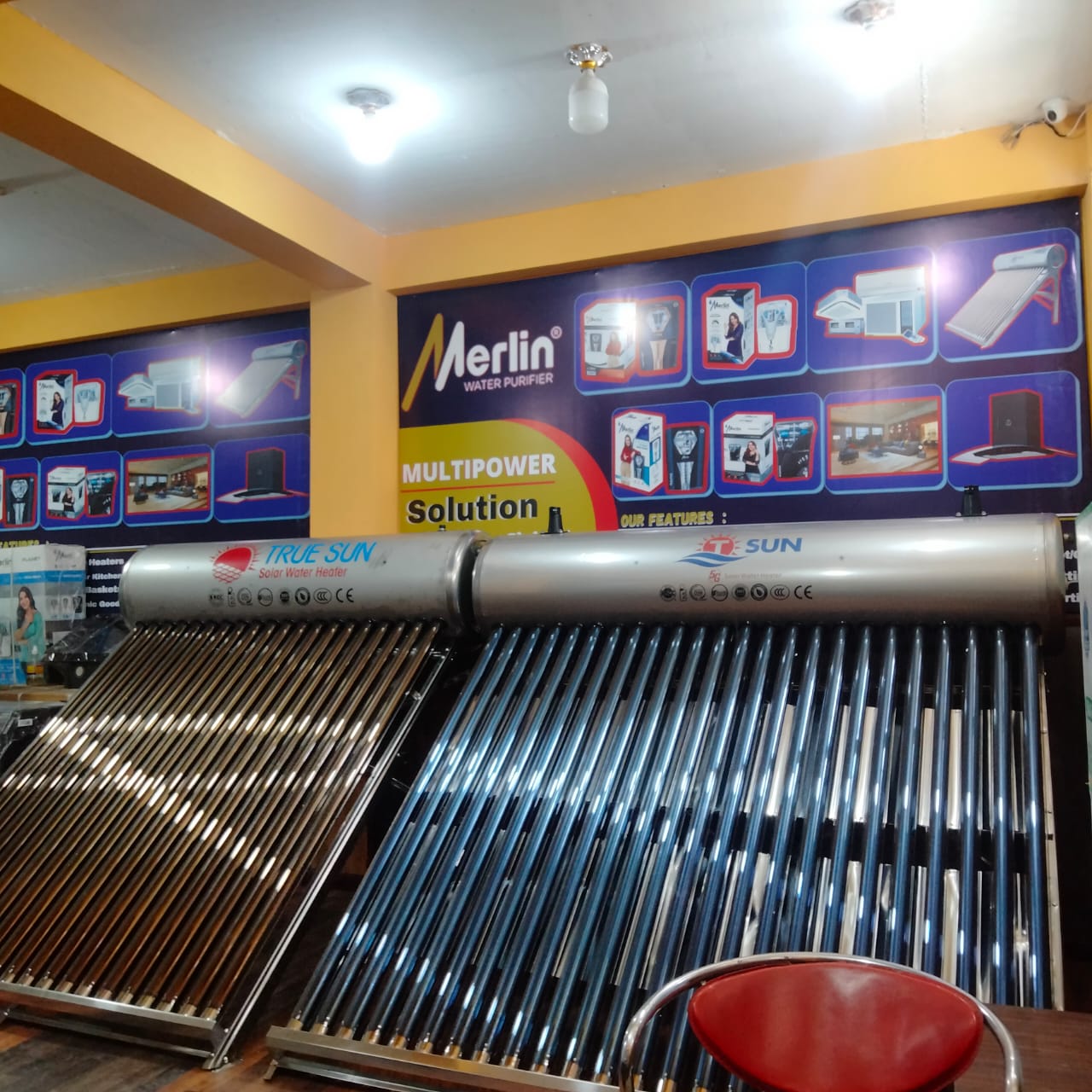
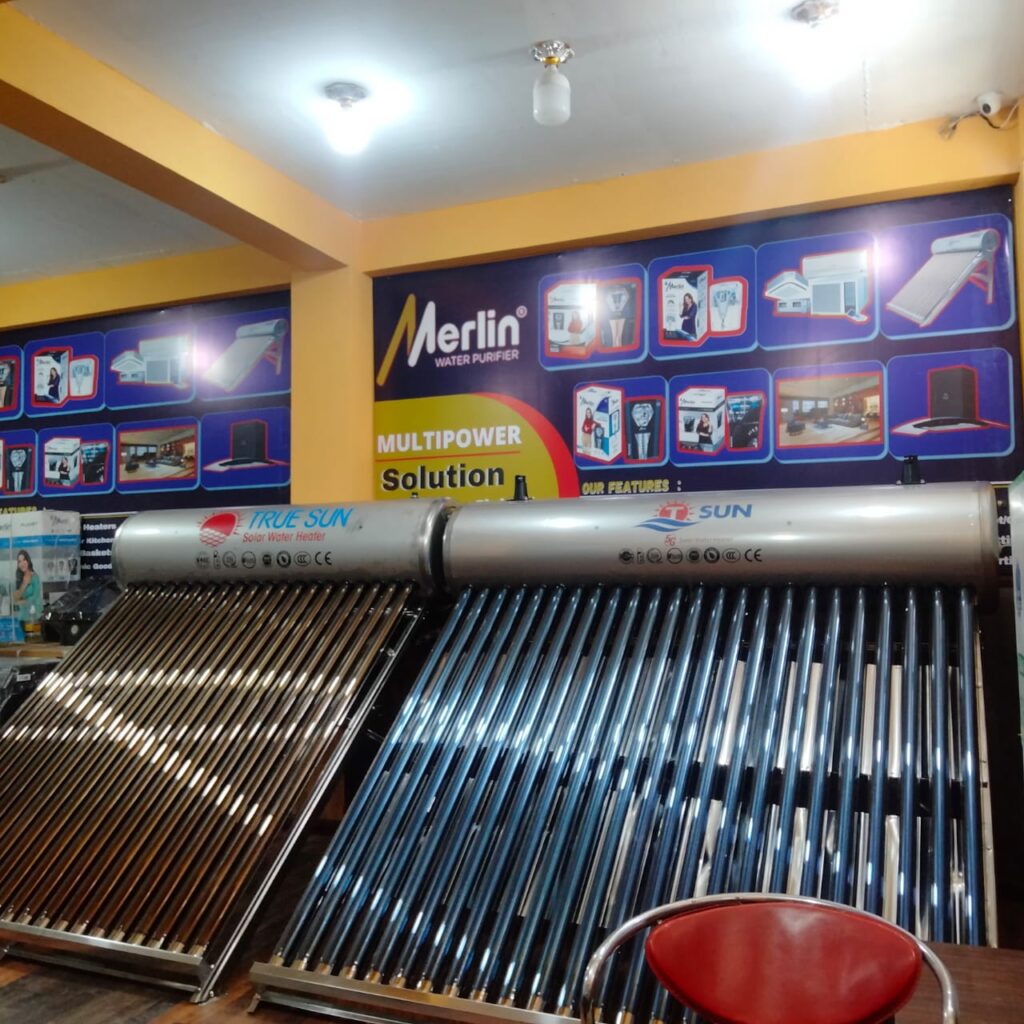
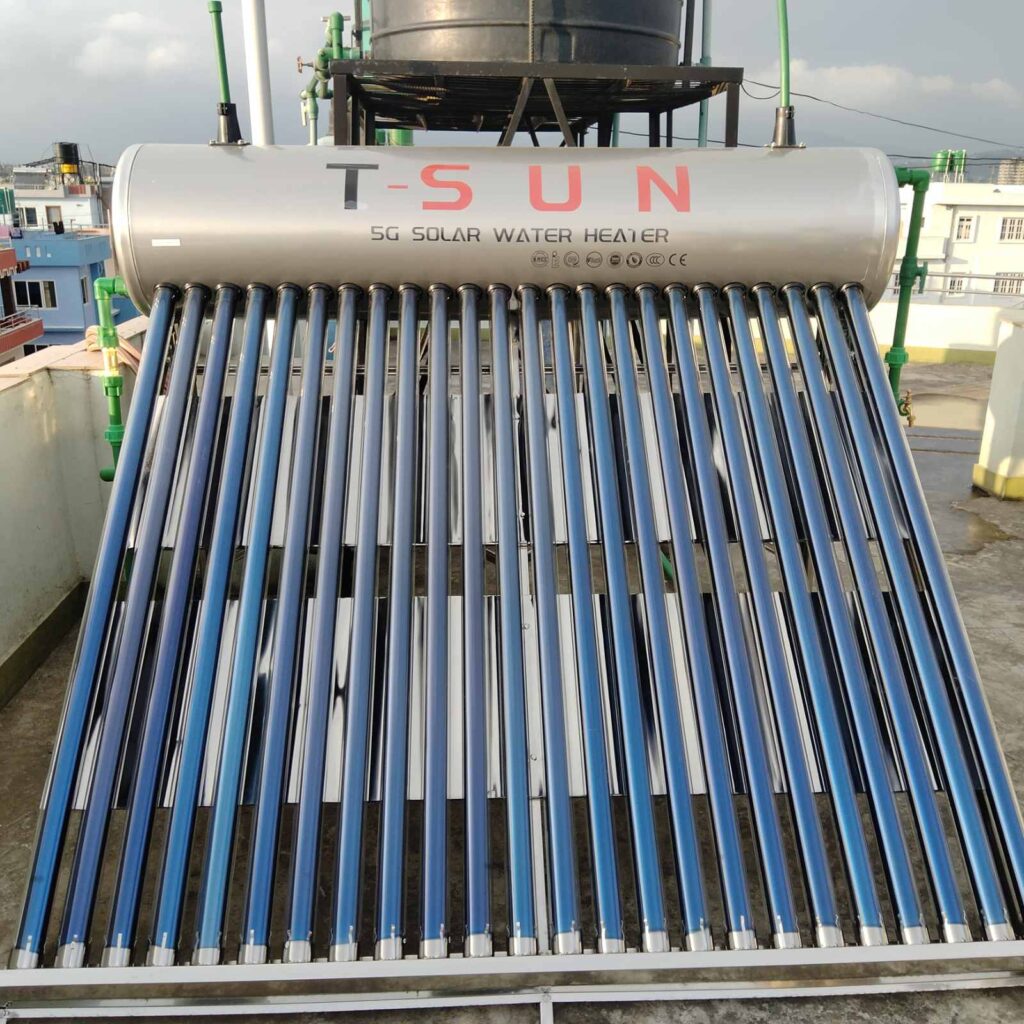
True Sun Solar Water Heater in Nepal

True Sun Solar Water Heater in Nepal – Benefits, Features & Savings

Introduction

The True Sun Solar Water Heater brings fast, reliable hot water to Nepali homes using vacuum-tube collectors and an insulated storage tank. Built for terrace and rooftop installation, it’s optimized for Kathmandu-style homes and reduces reliance on electric geysers β€” lowering your monthly energy bills while cutting household carbon emissions. This article explains how the system works, its features, local costs, installation tips, realistic savings estimates, and why solar thermal is an increasingly practical choice in Nepal.

Why solar water heaters make sense in Nepal

  • Nepal has been actively promoting solar thermal and rooftop solutions: government and energy agencies list solar water heaters among priority household technologies, and policy roadmaps/targets include expanded solar thermal adoption. The Alternative Energy Promotion Centre and national plans identify solar water heaters as a practical, low-carbon option for homes, lodges and institutions.
  • Academic and policy research shows the solar market in Nepal (both PV and thermal) is expanding as grid reliability, electricity tariffs, and off-grid needs push households to local renewable solutions. Recent studies and sector reports (2024–2026) highlight growing financial viability and government support for solar water heating.
  • Practical marketplace evidence: Nepali retailers and local suppliers list solar water heater models across price points (roughly NPR ~39,000–95,000 depending on capacity and brand), and Multi Power Solution lists the True Sun product in a mid-range bracket (~NPR 65,000 for a medium system). That makes solar water heaters an affordable near-term option for many urban homes.

What is the True Sun Solar Water Heater?

  • Vacuum tube collectors for fast heat absorption and good performance during cooler months or diffused sunlight.
  • Insulated storage tank (stainless steel / insulated body) to retain heat for hours after sunset.
  • Pressure-resistant design suitable for Nepal’s water pressure variations (choose a pressurized model if you have good mains pressure).
  • Compact rooftop footprint and straightforward mounting hardware for typical Kathmandu terraces.
  • Optional electric backup (hybrid option) or integration with existing electric geyser to guarantee hot water on very cloudy days.

Benefits for Nepali homeowners

  1. Lower electricity bills β€” reduce electric-geyser runtime (most homes use electric geysers during winter or when hot water demand is high). Realistic savings are shown in the savings section below.
  2. Reliable hot water β€” steady supply for showers, kitchen use and laundry when sized correctly.
  3. Fast payback in many cases β€” with rising electricity costs and frequent geyser use, payback periods of a few years are realistic for medium-use households. (Examples and math below.)
  4. Low maintenance & long life β€” vacuum-tube systems with stainless tanks typically require only occasional cleaning and basic annual checks.
  5. Environmentally friendly β€” solar thermal cuts household carbon emissions compared with fossil-fuel or grid electric heating.

Costs & pricing

  • Market price range for solar water heaters in Nepal (2025–2026): NPR ~39,000 to NPR ~95,000 depending on brand, capacity and tube count. Multi Power Solution lists the True Sun system in the midrange (β‰ˆNPR 65,000) for medium sized homes. Get an exact quote as prices vary by capacity (150 L, 200 L, 300 L etc.) and seasonal promotions.
  • Installation costs: Expect an additional NPR 2,000–10,000 depending on roof access, ducting, mounts and whether you need pressure fittings or structural reinforcements. (Ask for a site survey.)

Realistic savings example β€” conservative calculation

I’ll calculate conservative monthly savings for a medium household that currently uses an electric geyser.

Assumptions (conservative):

  • Electric geyser power β‰ˆ 3.0 kW (typical small household geyser).
  • Daily run time for hot water β‰ˆ 1 hour per day (showers + kitchen usage).
  • Electricity price (residential, average) β‰ˆ NPR 5.79 per kWh (recent measured average for residential users).

Step 1 β€” daily energy used by electric geyser:
3.0 kW Γ— 1.0 hour = 3.0 kWh per day

Step 2 β€” monthly energy (30 days):
3.0 kWh/day Γ— 30 days = 90.0 kWh per month

Step 3 β€” monthly cost (before solar):
90.0 kWh Γ— NPR 5.79/kWh =
β€” Multiply 5.79 Γ— 90 carefully:
5.79 Γ— 9 = 52.11 β†’ Γ—10 β†’ 521.10 NPR per month. (So running the geyser daily costs about NPR 521.10 with these conservative numbers.)

Step 4 β€” expected electrical reduction with a properly sized solar water heater:
Solar water heaters typically replace 70–90% of geyser runtime on sunny days; conservatively use 70% replacement to account for cloudy days and seasonal variation.

Electricity saved per month:
70% of 521.10 = 0.70 Γ— 521.10 =
β€” 521.10 Γ— 7 = 3,647.70 β†’ Γ·10 = 364.77 NPR saved per month.

Step 5 β€” annual saving:
364.77 Γ— 12 = 4,377.24 NPR per year

Payback estimate (simple):
If the True Sun system costs NPR 65,000 installed, then simple payback = 65,000 Γ· 4,377.24 β‰ˆ 14.85 years under this very conservative scenario.

Notes & interpretation:

  • The example above is deliberately conservative: it assumes only 1 hour/day geyser use and a modest electricity price. Many Nepali households run electric geysers longer (hot water for multiple people, laundry), and slab/seasonal electricity tariffs can make the effective unit price higher β€” which shortens payback. Some households also use the system to entirely avoid electric geyser use in summer months, which increases savings. For medium to heavy hot-water users the payback often falls to 3–7 years, especially when combining savings from fuel & peak tariff avoidance and accounting for rising electricity prices. Use a site-specific calculation (we can run one for your household).

Sizing & installation: what to pick for Kathmandu homes

  • Capacity rule of thumb: 50–75 L per person per day (showering & kitchen). For a family of 4, 200–300 L recommended. True Sun lists medium and large capacities; choose based on family size and hot-water habits.
  • Collector type: evacuated/vacuum tubes (True Sun) perform better in diffuse light and winter compared to flat-plate collectors. Good for Kathmandu’s temperate climate.
  • Pressurized vs gravity models: pressurized models integrate better with piped hot water and multi-floor distribution; gravity models are cheaper but limited. Choose pressurized for multi-storey homes.
  • Mounting & orientation: panels should face equator-ward (south in Nepal) and be tilted close to local latitude for best year-round output.

Maintenance & warranty β€” what to expect

  • Annual checkup: inspect tubes, tank insulation, pressure valves and pipe insulation.
  • Tube cleaning: vacuum tubes are low maintenance; clean more often in dusty areas.
  • Anti-freeze / anti-scaling: not usually needed in most of Kathmandu valley, but check water hardness and apply protective measures (sacrificial anode or filters) if very hard water.
  • Warranty: verify tank and tube warranty on True Sun product (ask Multi Power Solution for warranty documents and service SLA).

Pros & cons β€” honest appraisal

Pros

  • Low operating cost (solar heat is free)
  • Reliable hot water in sunny periods
  • Lower lifecycle emissions vs electric heating
  • Low maintenance vs complex PV + electric systems

Cons / caveats

  • Upfront cost (but falling with market competition)
  • Reduced performance on long, cloudy streaks (backup required)
  • Requires roof space and structural assessment

Who benefits most

  • Urban families with daily hot-water needs (showers + kitchen)
  • Guesthouses, lodges and small hotels (high hot-water demand) β€” widely used in Nepali tourism hubs. (The Kathmandu Post)
  • Homes with inverters/solar PV β€” combine for resilient hot-water and electricity backup.
FAQs

Frequently Asked Questions

Q: How much does a True Sun solar water heater cost in Nepal?

A: Price depends on capacity. Multi Power Solution lists medium systems around NPR ~65,000; smaller/larger models range from ~NPR 39,000 to 95,000 depending on tube count and tank size. Ask for a site survey and exact quote.

Q: Will it work in monsoon or winter?

A: Yes β€” vacuum tube collectors still collect diffuse light in monsoon and perform well in Kathmandu winter. Expect some reduction in very cloudy rainy spells; consider a small electric backup for long overcast periods.

Q: How much maintenance is needed?

A: Minimal: visual checks, tube cleaning if dusty, and an annual service. Tubes and tanks typically have multi-year warranties β€” confirm with supplier.

Q: Do I need special permits to install on my roof?

A: Generally no special permit is required for private homes, but check local building/heritage rules (especially in heritage areas like Kathmandu and Bhaktapur) and ensure the roof structure can carry the load. Multi Power Solution can arrange structural checks.

How Multi Power Solution helps

If you’d like, Multi Power Solution can:

  • Provide a free on-site survey and sizing recommendation
  • Give a detailed quote (product, mounting, plumbing, warranty)
  • Install and commission the system with local after-sales support

Contact Multi Power Solution for a free roof survey and exact True Sun quote.

Sources & further reading

  • True Sun / Multi Power Solution product pages. (Multi Power Solution)
  • Alternative Energy Promotion Centre (Nepal) β€” national targets and programs for household renewable tech. (aepc.gov.np)
  • Solar Thermal Roadmap & Implementation Plan for Nepal (sector planning). (aee-intec.at)
  • Market listings & price ranges (Hardwarepasal, SolarFilterNepal, Nebha Traders). (https://hardwarepasal.com)
  • Residential electricity price reference (average) used for savings estimate. (GlobalPetrolPrices.com)
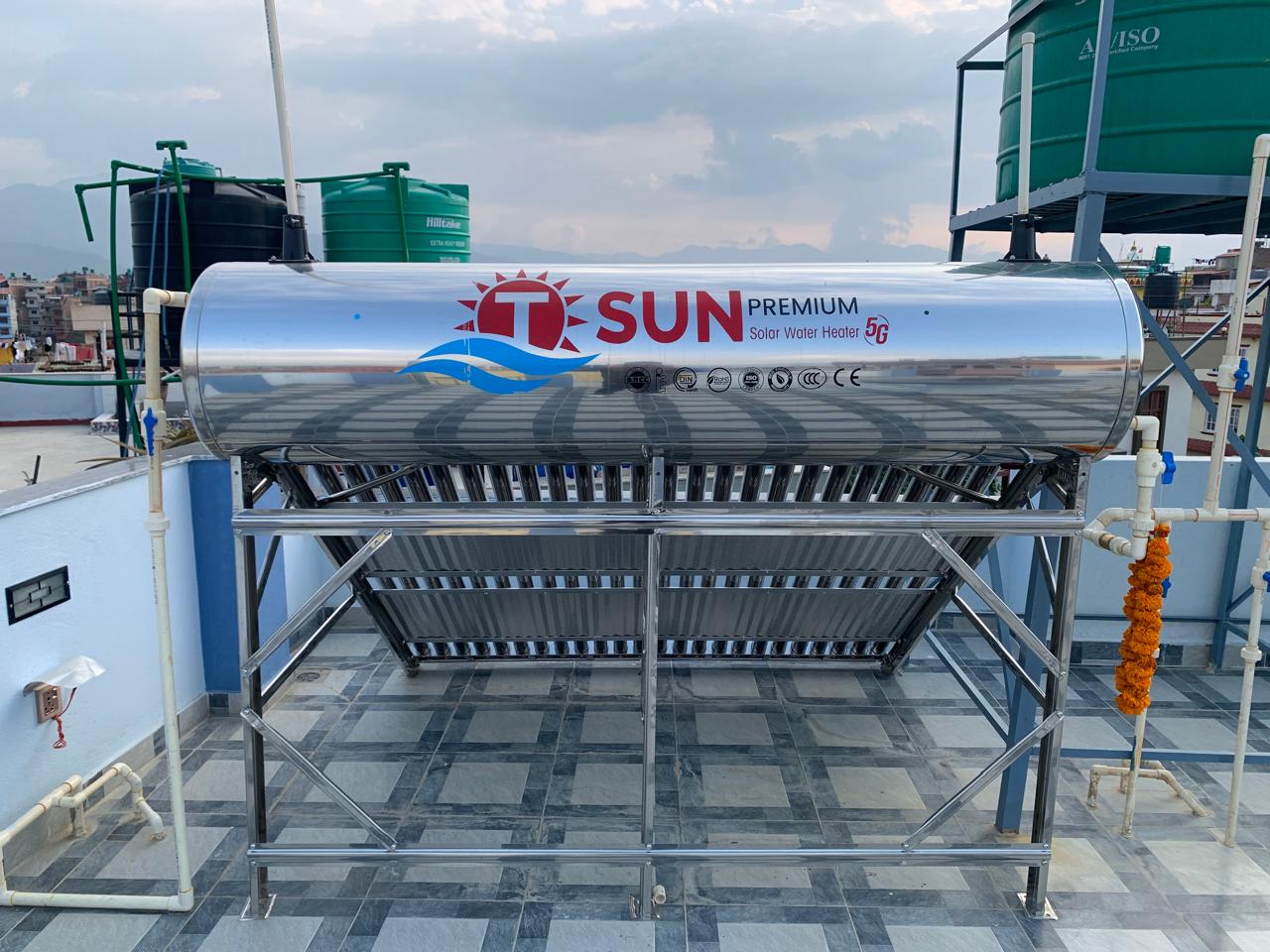
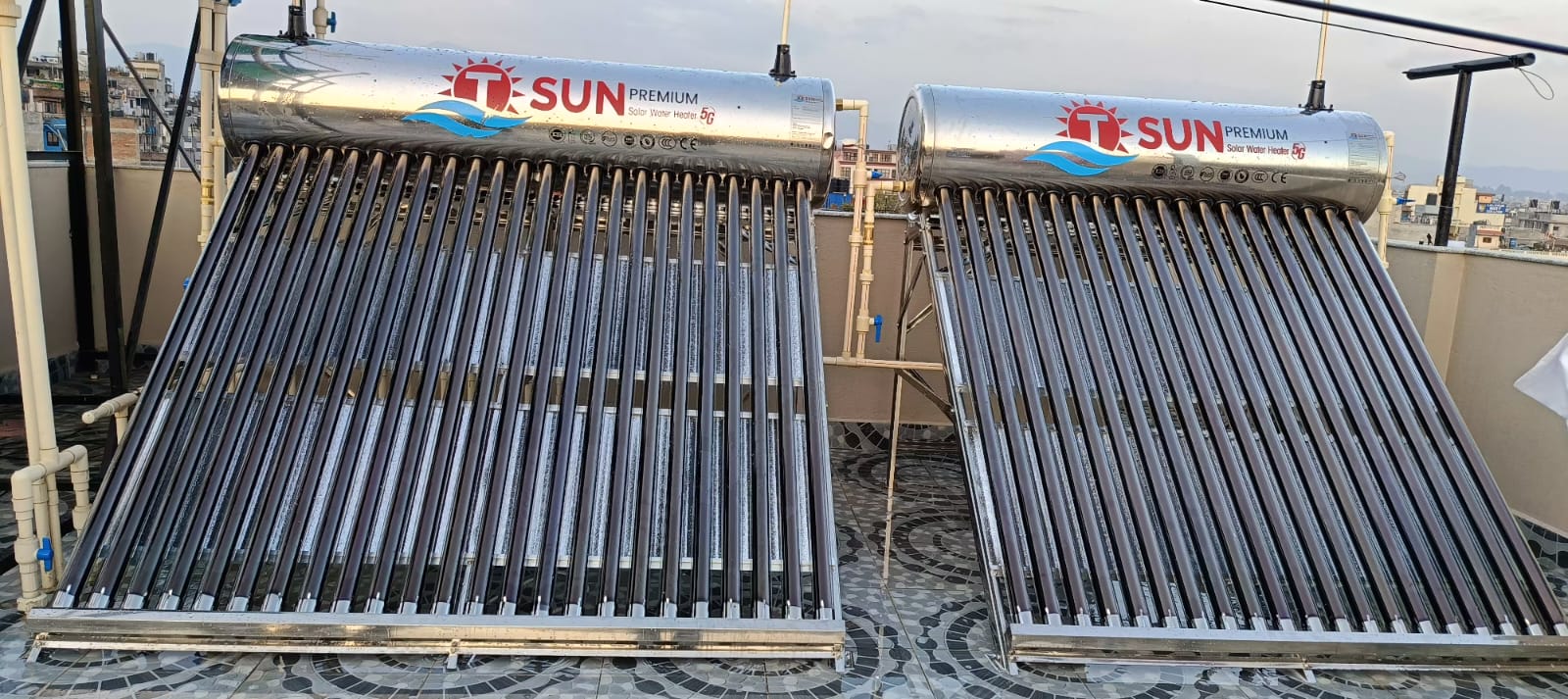
T-SUN solar water heater installed on rooftop in Nepal

T-SUN Solar Water Heater Price in Nepal 2026: Models, Warranty, Cost Saving & Complete Buying Guide

Hot water is no longer a luxury in Nepalβ€”it is a daily necessity. From cold winters in Kathmandu Valley to early-morning routines in urban apartments and rural homes, demand for reliable hot water is increasing rapidly. As electricity tariffs rise and electric geysers become expensive to operate, many households are turning to a smarter, long-term solution: solar water heaters.

Among the available brands, T-SUN Solar Water Heater in Nepal has gained strong popularity due to its durability, winter performance, and long warranty. But a common question remains:

πŸ‘‰ Is T-SUN solar water heater worth it in Nepal?

This detailed guide answers that question by covering price, models, features, performance in Nepali climate, real cost savings, and buying tips, helping you make an informed decision in 2026.

β˜€οΈ Why Solar Water Heaters Are Growing Fast in Nepal

Nepal is naturally suited for solar energy, even during winter. With 300+ sunny days per year and strong solar radiation due to altitude, solar water heating works efficiently across most regions.

Main reasons for rising demand:

  • Rising electricity costs and load pressure
  • Cold winters in Kathmandu, Bhaktapur & Lalitpur
  • High power consumption of electric geysers
  • Long-term cost savings with solar technology
  • Environmental awareness and renewable energy adoption

As a result, searches like β€œsolar water heater price in Nepal” and β€œbest solar water heater in Nepal” are increasing every year.

🏭 About T-SUN Solar Water Heater Brand

T-SUN is a well-established solar water heater brand with 15+ years of experience, widely used in residential and commercial buildings across Nepal.

Why T-SUN is trusted:

  • Proven vacuum tube technology
  • Strong performance in winter and cloudy days
  • Long warranty and product lifespan
  • Widely available spare parts
  • Trusted local dealer network

In Nepal, Multi Power Solution (Bhaktapur) is an authorized country dealer, providing installation, service, and after-sales support.

πŸ’° T-SUN Solar Water Heater Price in Nepal (2026 Updated)

Based on official pricing and market availability, here are the popular T-SUN Premium 5G models in Nepal:

ModelCapacityPrice (NPR)
T-SUN Premium 15 XL~150 LitersRs. 60,000
T-SUN Premium 20 XL~200 LitersRs. 80,000
T-SUN Premium 24 XL~240 LitersRs. 96,000
T-SUN Premium 30 XL~300 LitersRs. 1,20,000

Prices may vary slightly depending on location, installation complexity, and stand structure.

πŸ”§ Key Features of T-SUN Solar Water Heater

1️⃣ Advanced Vacuum Tube Technology

T-SUN uses high-quality vacuum tubes that:

  • Absorb heat efficiently
  • Work even in winter and cloudy weather
  • Retain heat for long hours

2️⃣ Long Warranty & Durability

  • 10 years product guarantee
  • Up to 35 years warranty on tubes
    This makes T-SUN one of the longest-lasting solar water heater options in Nepal.

3️⃣ Strong Winter Performance

Unlike flat-plate systems, vacuum tube heaters perform well during:

  • Kathmandu Valley winters
  • Cold mornings
  • Low sunlight conditions

4️⃣ Zero Electricity Consumption

Once installed, hot water is produced without electricity, drastically reducing monthly power bills.

🏠 Which T-SUN Model Is Right for Your Home?

Family SizeRecommended Model
2–3 people150 Liter (15 XL)
4–5 people200 Liter (20 XL)
5–6 people240 Liter (24 XL)
6+ people / Commercial300 Liter (30 XL)

Choosing the right size ensures optimal hot water availability and better system efficiency.

πŸ“‰ Cost Saving & Payback Calculation (Nepal Context)

Let’s compare solar water heater vs electric geyser.

Electric Geyser Cost Example:

  • Power: 2,000 watts
  • Daily usage: 2 hours
  • Monthly units: ~120 units
  • Monthly cost (avg NPR 10/unit): Rs. 1,200
  • Yearly cost: Rs. 14,400

Solar Water Heater:

  • Electricity cost: Rs. 0
  • Maintenance: minimal

Payback Period:

A Rs. 80,000 T-SUN 200L system recovers cost in:
πŸ‘‰ 2.5–3 years

After that, hot water is almost free for 15–20+ years.

βš–οΈ Solar Water Heater vs Electric Geyser

FeatureSolar Water HeaterElectric Geyser
Electricity CostZeroHigh
Monthly ExpenseNoneContinuous
Winter PerformanceGood (vacuum tubes)Good
Lifespan20–30+ years5–8 years
Environmental ImpactEco-friendlyHigh carbon footprint

Conclusion: Solar water heaters are far more economical and sustainable in Nepal.

πŸ›  Installation & Maintenance in Nepal

Installation:

  • Rooftop installation (flat or sloped)
  • Takes 3–5 hours
  • Works with overhead or gravity water tanks

Maintenance:

  • Occasional cleaning
  • Rare tube replacement (after many years)
  • Very low maintenance cost
❓ FAQs

Frequently Asked Questions (FAQs)

What is the price of T-SUN solar water heater in Nepal?

Prices range from Rs. 60,000 to Rs. 1,20,000 depending on capacity.

Is T-SUN solar water heater good for winter?

Yes. Vacuum tube technology works efficiently even in cold and cloudy conditions.

How long does a solar water heater last?

With proper care, 20–30+ years. Tubes have up to 35 years warranty.

Does solar water heater work on cloudy days?

Yes. Performance may reduce slightly but hot water is still available.

Is solar water heater worth it in Nepal?

Absolutely. Payback is fast, running cost is zero, and lifespan is long.

Where can I buy T-SUN solar water heater in Nepal?

From authorized dealers like Multi Power Solution, Bhaktapur.

βœ… Final Verdict: Is T-SUN Solar Water Heater Worth It in Nepal?

Yesβ€”T-SUN solar water heater is one of the best investments for Nepali homes in 2026.

βœ” Saves electricity cost
βœ” Works well in winter
βœ” Long warranty & lifespan
βœ” Reliable hot water
βœ” Environment-friendly

For households in Kathmandu Valley and beyond, T-SUN offers excellent value for money.

If you are planning to install a T-SUN solar water heater in Nepal, contact Multi Power Solution for genuine products, professional installation, and after-sales support.

Solar Water Heaters in Nepal

Solar Water Heaters in Nepal – Clean, Efficient, Reliable Hot Water for Kathmandu Valley

Looking for a sustainable and cost-efficient way to get hot water in Kathmandu, Bhaktapur, or Lalitpur? Our solar water heaters are designed specifically for Nepali homes, delivering reliable hot water using solar energy, saving you money on electricity or fuel, and helping the environment.

Why Install a Solar Water Heater in Nepal?

  • Abundant Sunshine – Nepal, especially Kathmandu Valley, has ample solar irradiation year-round to make solar heaters highly efficient.
  • Energy Cost Savings – Cut down electricity or LPG bills used for heating water. Solar heating provides free energy once the system is installed.
  • Eco-Friendly & Sustainable – Reduce carbon footprint, lessen dependency on fossil fuels, support cleaner air in urban areas like Kathmandu and Lalitpur.
  • Reliable Hot Water – Even during occasional power outages, solar water heaters (with good storage and backup) ensure hot water availability.

Our Solar Water Heater Products

We carry several trusted models to suit different needs and budgets in Nepal:

ModelPrice (Approx.)Best For
Pure’s Solar Water Heater – NPR ~80,000Households with moderate to high hot water usage – washings, showers, etc.
True Sun Solar Water Heater – NPR ~65,000Medium sized homes / flats in Kathmandu Valley. Good balance of capacity & price.
TSun Solar Water Heater – NPR ~70,000For bigger demand; more storage or higher output.

Prices are indicative and may vary depending on model, capacity, and installation costs.

Key Features & Benefits

  • High Efficiency Solar Collectors – Designed to capture maximum solar energy even on less sunny days.
  • Large Storage Tanks – Enough capacity to supply hot water in the mornings and evenings when solar input is lower.
  • Robust Materials & Corrosion Resistance – Heavy-duty materials to handle Nepal’s climate (UV, rain, dust).
  • Backup Heating Options – Some models may have electrical backup or provisions to integrate with your existing hot water system.
  • Cost Savings Over Time – Though upfront cost is higher, payback through energy savings typically within a few years.

Specifications & What to Look For

When selecting a solar water heater in Kathmandu, Bhaktapur, Lalitpur, consider these technical specs:

SpecificationRecommended Value / Note
CapacityBased on household size: 100-200 liters for 3-5 persons, more for larger families or commercial use.
Collector TypeFlat plate vs evacuated tube; evacuated tube often performs better in colder or less sunny weather.
InsulationWell-insulated tanks reduce heat loss overnight; essential in Kathmandu winters.
Material / Build QualityStainless steel or high-grade materials to resist corrosion and maintain hygiene.
Warranty & After-Sales ServiceLocal support is vital; checking service in Kathmandu Valley is a plus.
Installation QualityProper tilt angle & orientation (usually south-facing in Nepal), good support structure.

Why Multipower Solution is Best Choice in Kathmandu, Bhaktapur & Lalitpur

  • Localized Expertise: We understand local climate, infrastructure, and user habits in Kathmandu Valley.
  • Transparent Pricing: No hidden fees; installation cost, system capacity, and service are all upfront.
  • Quick & Professional Installation: We cover Kathmandu, Bhaktapur, Lalitpur with reliable installers.
  • After-Sales Support: Maintenance, parts, and repair support locally, so your system stays well-maintained.
  • Quality Assurance: We source trusted brands, use durable materials, test performance.
FAQs

FAQ – Frequently Asked Questions

1. Will solar water heater work in monsoon / winter season?

Yes. Solar water heaters perform even with less sunshine, especially if using evacuated tube collectors and well-insulated tanks. They may require auxiliary heating during long cloudy periods.

2. How much electricity / LPG can I save?

Savings depend on household usage and system size. Many households in Kathmandu Valley report 50-80% savings on hot water heating once solar system is in place.

3. What capacity do I need for a family of four?

Typically, 150-200 litre tank is sufficient for 3-5 persons for daily usage (bathing, washing etc.), but if you have higher demand (multiple showers, frequent usage etc.), you may want a larger tank.

4. How long does installation take?

Installation in Kathmandu / Lalitpur / Bhaktapur generally takes 1-2 days depending on roof access, orientation, and model selected.

5. What maintenance is required?

Periodic inspection of pipes, cleaning of collector surfaces (dust, debris), ensuring insulation intact. Minimal maintenance required otherwise.

Tips

Installation & Tips

Consider backup options (electric or conventional heater) for cloudy or winter days.

Orient the solar collector toward true south for maximum sun exposure in Kathmandu, Bhaktapur & Lalitpur.

Ensure roof strength can support the solar water heaterβ€”some heavy models need reinforced mounting.

Proper tilt angle (around 30-45 degrees depending on your latitude and roof slope) helps capture maximum solar energy.

Use high-quality pipes and insulation to reduce heat loss.

Order & Contact Us

Start enjoying hot water from the sun!

We deliver & install in Kathmandu, Bhaktapur, Lalitpur, as well as other parts of Nepal. Free site survey available upon request.

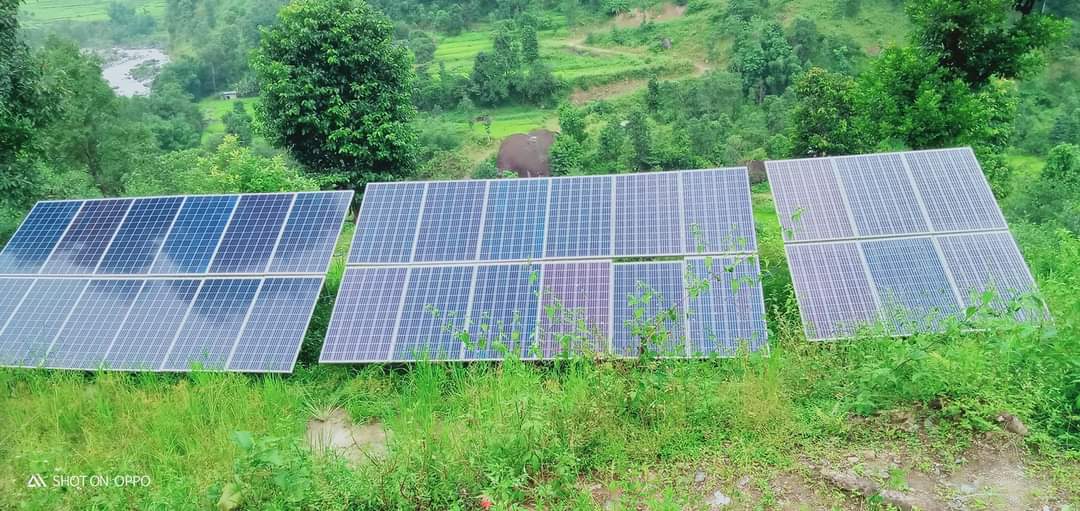
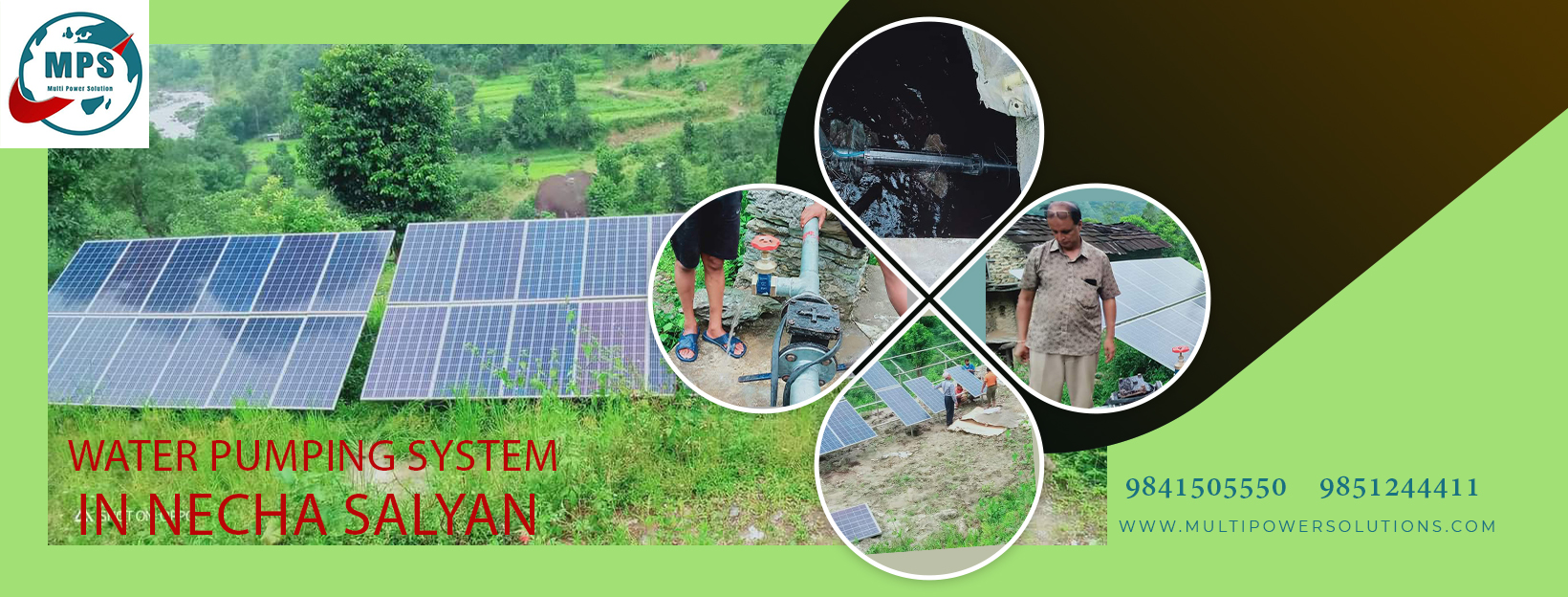
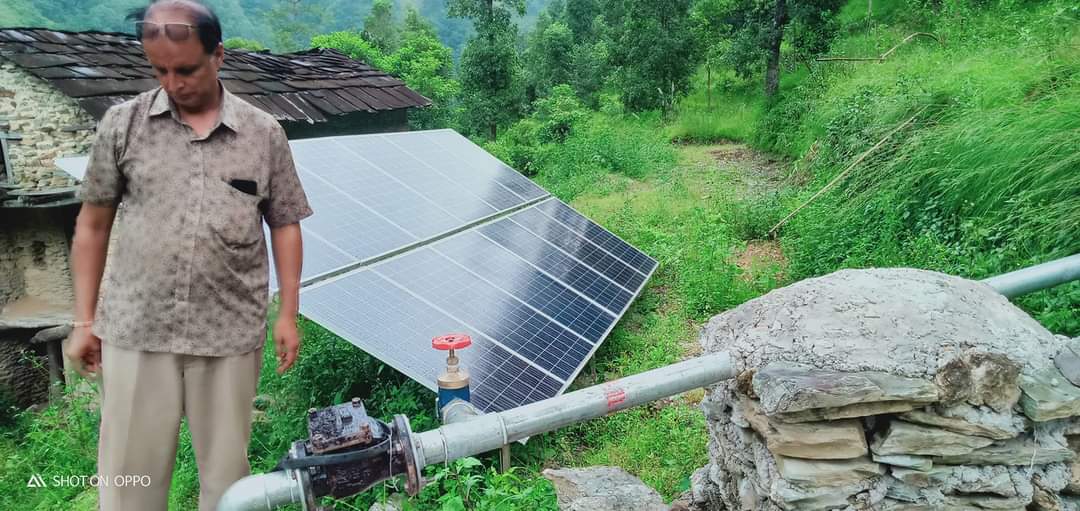
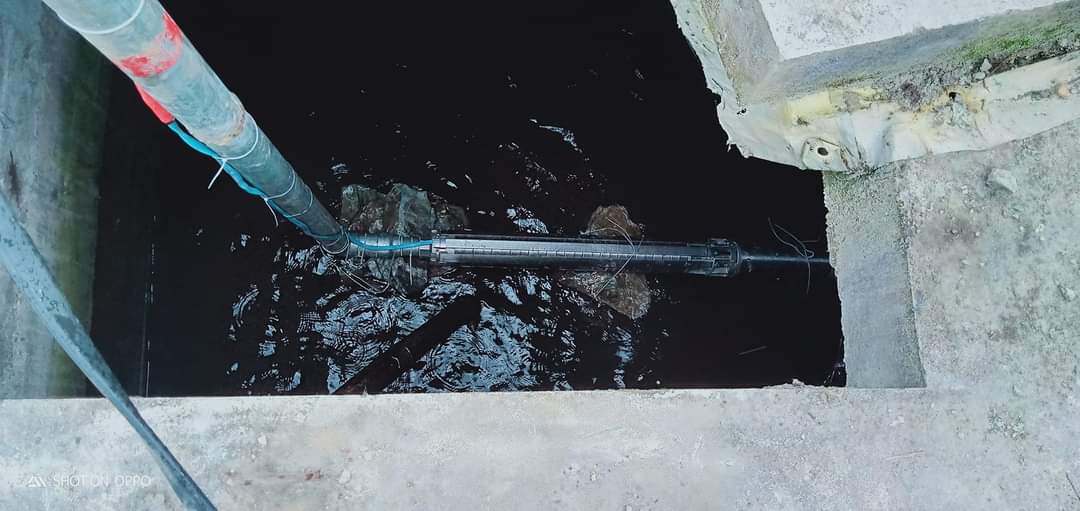
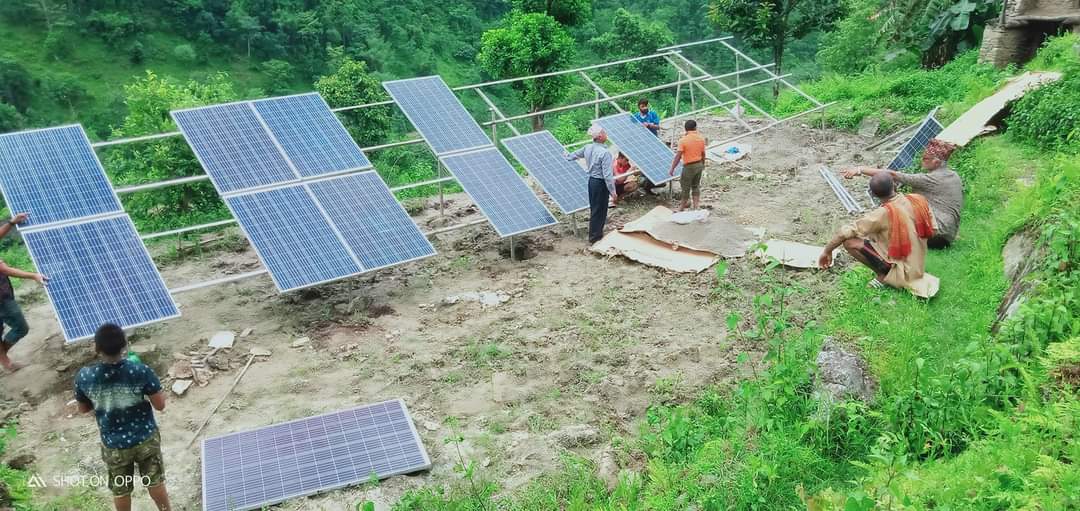
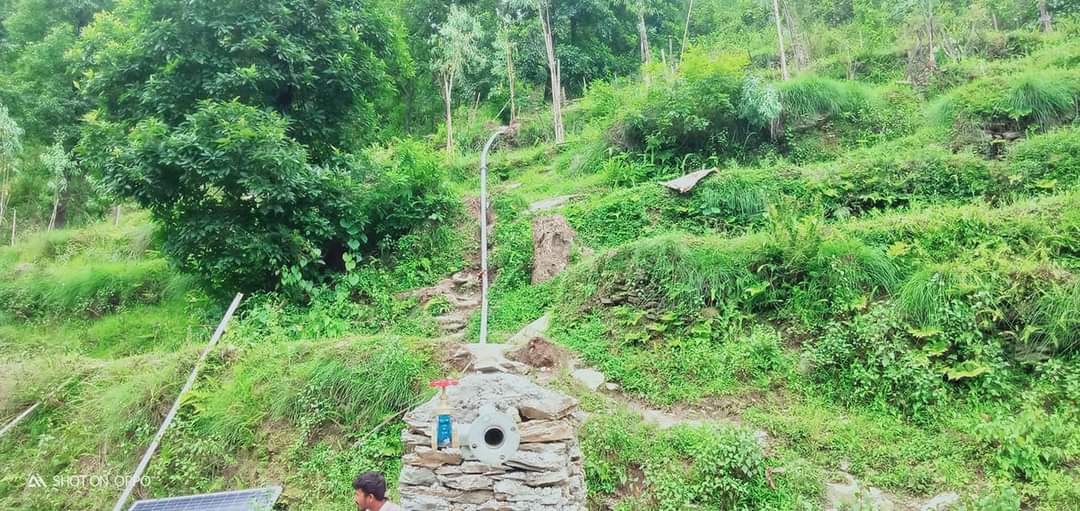
10 KWA Solar Water pumping System installation in Necha Salyan

Solar Water Pump Installation in Necha Salyan: Discover how our 10 kW solar-water pumping setup is transforming water access in remote Nepali villages. This clean-energy solution provides reliable irrigation and water supply day after day β€” with zero fuel or electricity bills, minimal maintenance, and long-term savings. Contact us to see the installation in action and learn why solar pumping is a smart choice for rural Nepal. β˜€οΈπŸŒΏ

Shopping Cart

No products in the cart.