
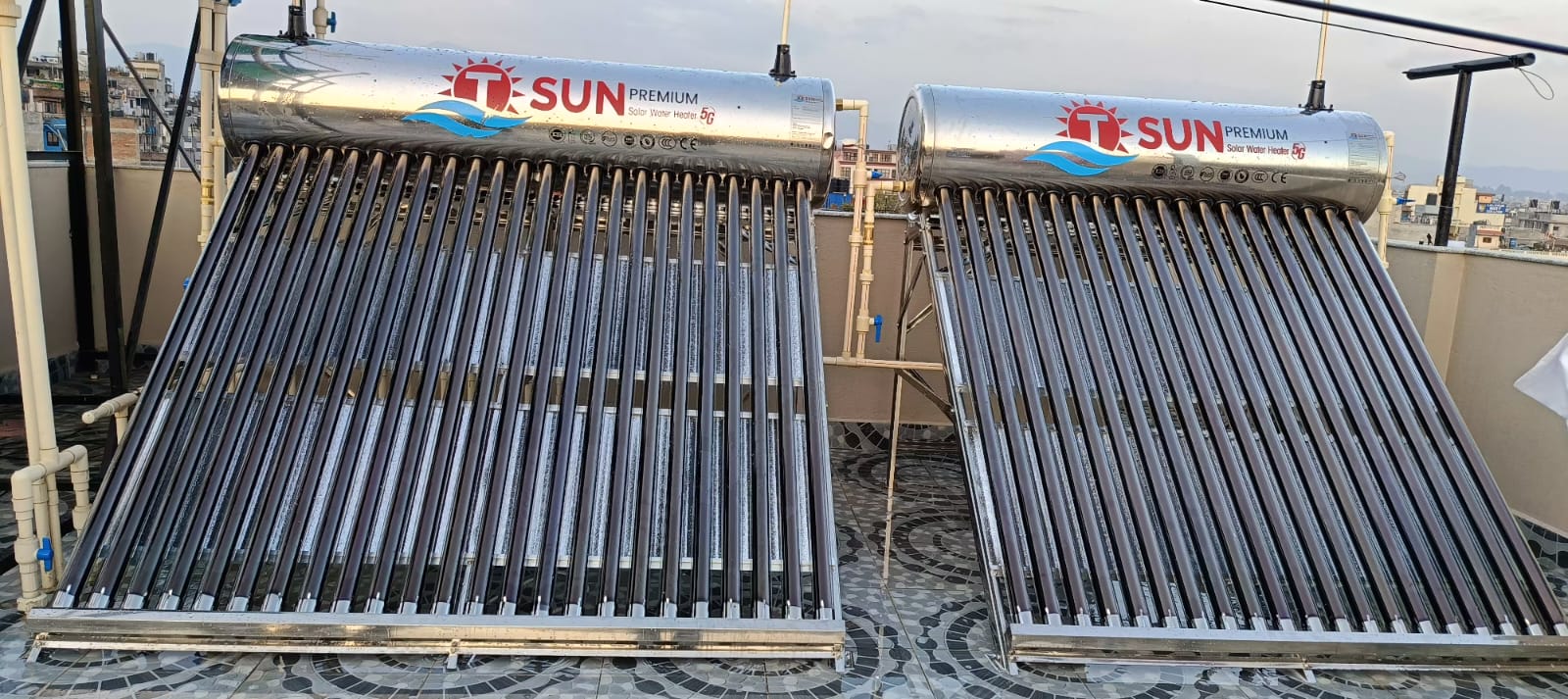
As energy costs rise and homeowners seek sustainable alternatives, solar water heaters have become one of the most practical renewable energy solutions for Kathmandu homes. With abundant sunlight, increasing electricity demand, and growing awareness of eco-friendly living, solar water heating is no longer a luxury — it is a smart investment.
This article presents a realistic residential project case study of a solar water heater installation in Kathmandu, explaining the client’s problem, system design, installation process, cost, challenges, and long-term benefits.
Project Overview
📍 Location
Kathmandu Valley (Residential Area)
🏠 Property Type
Independent residential house (2.5 floors)
👨👩👧👦 Family Size
5 members
🚿 Hot Water Usage
- Daily bathing
- Kitchen use
- Winter-season demand increase
🔥 Previous System
Electric geyser (high electricity consumption)
Client’s Problem & Requirements
The homeowner approached Multi Power Solution with the following concerns:
Key Issues
- High electricity bills during winter
- Frequent power fluctuations
- Limited hot water during peak hours
- Desire for an eco-friendly solution
- Low maintenance preference
Client Goals
✅ Reduce electricity cost
✅ Ensure continuous hot water supply
✅ Use renewable energy
✅ Long-term reliable solution
Why Solar Water Heater Was Recommended
After a site inspection and usage analysis, a solar water heating system was identified as the most suitable solution because:
- Kathmandu receives sufficient sunlight year-round
- Rooftop space was available
- Family hot-water demand was consistent
- Payback period was attractive (3–5 years)
- Minimal maintenance required
System Design & Capacity Selection
Selected System Type
Pressurized Solar Water Heater System
Capacity Chosen
300 Liters
Why 300 Liters?
- Suitable for 4–6 family members
- Handles winter demand efficiently
- Supports simultaneous usage
- Future-proof for increased use
Main Components Installed
- High-efficiency solar collector panels
- Insulated stainless steel storage tank
- Pressure-resistant piping
- Temperature & pressure safety valve
- Backup electric heating option (optional)
Installation Process (Step-by-Step)
1. Site Survey & Roof Assessment
- Roof direction and tilt evaluated
- Shadow-free area identified
- Structural safety confirmed
2. System Positioning
- Panels aligned south-facing
- Optimal angle set for Kathmandu latitude
- Tank placed for minimal heat loss
3. Mounting & Plumbing
- Strong mounting frame installed
- Heat-resistant insulated pipes used
- Leak-proof plumbing connections ensured
4. Safety & Testing
- Pressure testing completed
- Temperature performance tested
- Water flow and backup system checked
5. Client Training
- System usage explained
- Maintenance guidelines shared
- Safety instructions provided
Installation Timeline
| Task | Duration |
| Site inspection | 1 day |
| Material preparation | 2 days |
| Installation | 1 day |
| Testing & handover | Same day |
⏱️ Total Time: 3–4 working days
Cost Breakdown (Approximate – Kathmandu)
| Item | Cost Range (NPR) |
| 300L Solar Water Heater | 85,000 – 1,20,000 |
| Installation & fittings | 10,000 – 20,000 |
| Plumbing materials | Included |
| Total Project Cost | 95,000 – 1,40,000 |
(Cost varies by brand, roof condition, and system type.)
Performance Results After Installation
🌞 Hot Water Availability
- 24/7 hot water during sunny days
- Sufficient storage for early mornings
- Backup option for cloudy days
💡 Electricity Savings
- Electric geyser usage reduced by ~70–80%
- Significant winter bill reduction
🌱 Environmental Impact
- Reduced carbon footprint
- Clean, renewable energy usage
- Less dependency on grid electricity
Challenges Faced & Solutions
Challenge 1: Limited Roof Space
✔ Optimized panel placement using compact layout
Challenge 2: Winter Performance Concern
✔ Selected pressurized system with better heat retention
Challenge 3: Water Pressure Compatibility
✔ Pressure-rated fittings and valves installed
Maintenance Requirements
One of the biggest advantages of solar water heaters is low maintenance.
Recommended Maintenance
- Tank inspection once a year
- Panel cleaning every 3–6 months
- Pipe insulation check annually
🛠️ No daily operation or monitoring needed.
Is Solar Water Heater Suitable for Kathmandu Homes?
✅ Yes, especially for:
- Independent houses
- Homes with rooftop access
- Families with regular hot-water needs
- Environment-conscious homeowners
Apartments can also install shared or centralized systems depending on structure.
Comparison: Solar Water Heater vs Electric Geyser
| Feature | Solar Heater | Electric Geyser |
| Running cost | Very low | High |
| Power dependency | No | Yes |
| Eco-friendly | Yes | No |
| Long-term savings | High | Low |
| Maintenance | Low | Medium |
Expert Insight
Based on field experience in Kathmandu, solar water heaters are among the highest ROI renewable energy solutions for residential use. When installed correctly with proper sizing and insulation, systems last 15–20 years with minimal maintenance.
Choosing the right capacity and professional installation is key to performance and safety.
FAQs
FAQs – Solar Water Heater Installation in Kathmandu
Q1. Does a solar water heater work in winter?
Yes. Modern systems are designed to retain heat and perform well even in winter.
Q2. What happens on cloudy days?
Stored hot water and optional electric backup ensure continuous supply.
Q3. Is permission required for installation?
For private homes, no special permission is usually required.
Q4. How long does installation take?
Typically 1 day after materials are ready.
Why Choose Multi Power Solution?
Multi Power Solution provides:
- Site-specific system design
- Quality solar water heaters
- Professional installation
- After-sales support
- Honest consultation & sizing
👉 Switch to solar hot water and reduce your energy bills the smart way.