
As solar energy adoption continues to grow across Nepal, homeowners, businesses, schools, industries, and commercial buildings are increasingly investing in solar power systems to reduce electricity costs and improve energy independence. However, many solar system owners overlook one critical aspect of maintaining long-term performance: solar maintenance before the monsoon season.
Nepal’s monsoon season brings heavy rainfall, strong winds, dust accumulation, humidity, lightning risks, and environmental stress that can significantly impact solar panel efficiency and system lifespan if proper maintenance is not performed beforehand.
According to Nepal’s renewable energy reports, solar energy adoption continues to rise as the country expands renewable energy infrastructure and promotes clean energy solutions. Renewable energy utilization increased by approximately 2.39% compared to the previous fiscal year, reflecting growing interest in solar technologies across Nepal.
For homes and businesses relying on solar power, preventive maintenance before monsoon is one of the most effective ways to protect investments and maximize energy production.
In this complete guide from Multi Power Solution, we explain why solar maintenance is essential before monsoon season, common problems caused by neglected systems, expert maintenance tips, and how professional servicing can improve performance and safety.
Solar Energy Growth in Nepal
Solar energy is becoming an important part of Nepal’s renewable energy future.
Recent energy sector reports indicate increasing investment in:
- Rooftop solar systems
- Commercial solar installations
- Rural solar electrification
- Grid-connected solar projects
- Industrial solar systems
The Alternative Energy Promotion Centre (AEPC) continues promoting solar energy adoption across rural and semi-urban regions of Nepal.
Studies also show Nepal possesses enormous solar energy potential, with significant opportunities for rooftop and grid-connected solar systems in urban areas such as Kathmandu Valley, Pokhara, and Biratnagar.
As solar adoption grows, proper maintenance becomes increasingly important.
Why Monsoon Season Is Challenging for Solar Systems
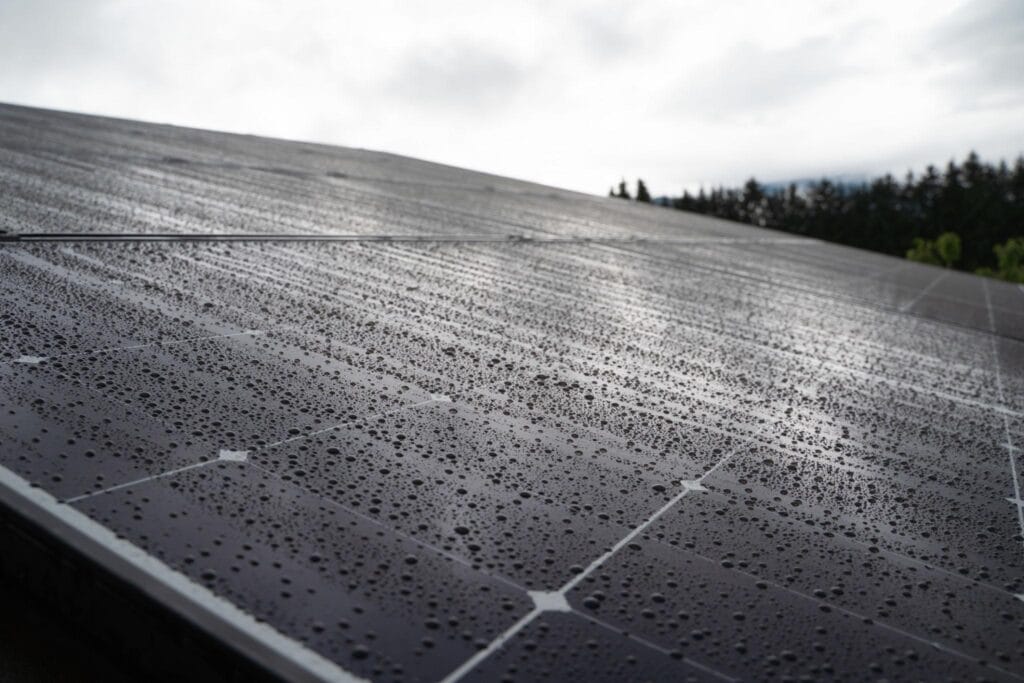
Many people assume rain automatically cleans solar panels and improves performance.
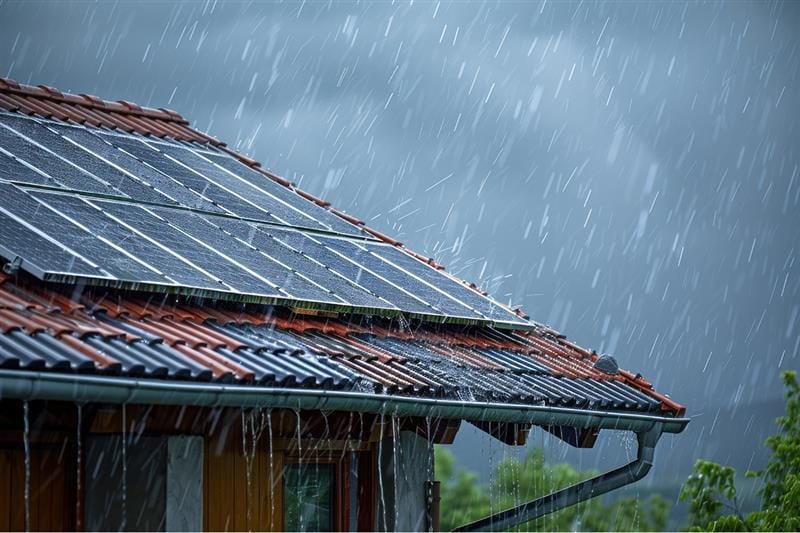
While rain can remove some dust, monsoon weather introduces several challenges:
- Heavy moisture
- Humidity
- Water seepage
- Corrosion risk
- Electrical faults
- Loose mounting structures
- Lightning threats
- Reduced sunlight exposure
- Dirt accumulation around panel edges
Without proper inspection before monsoon, these issues can lead to expensive repairs and reduced power generation.
Why Solar Maintenance Before Monsoon Is Important
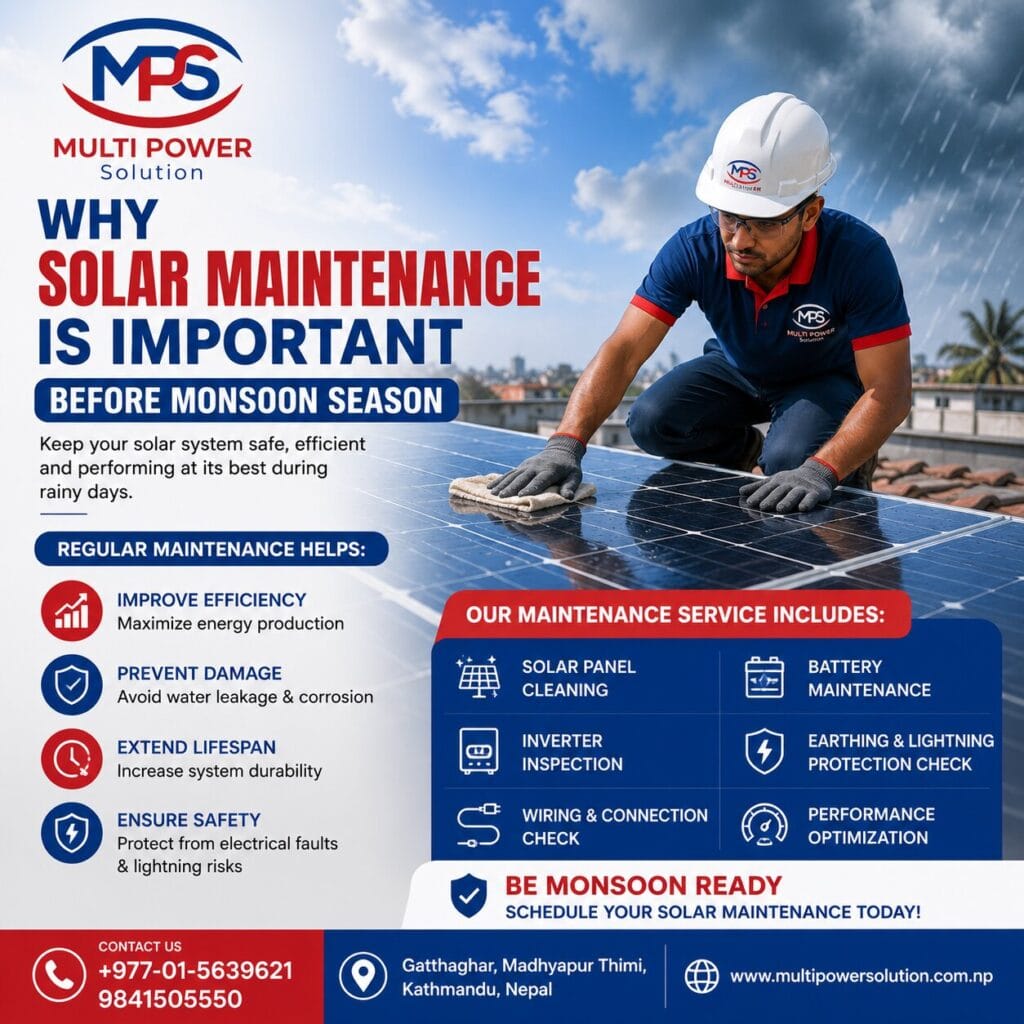
1. Improve Solar Panel Efficiency
Dust, pollution, bird droppings, leaves, and debris often accumulate on solar panels during dry months.
Research on solar radiation in Kathmandu Valley shows that seasonal weather significantly affects solar energy availability and performance.
Dirty panels can reduce energy generation considerably.
Pre-monsoon cleaning helps:
- Maximize sunlight absorption
- Improve energy production
- Increase system efficiency
- Reduce performance loss
Clean panels perform much better during periods of lower sunlight availability.
2. Detect Water Leakage Risks
One of the biggest monsoon threats is water penetration.
Water can enter through:
- Damaged cable joints
- Loose connectors
- Cracked conduits
- Faulty junction boxes
If unnoticed, these issues may cause:
- Short circuits
- Corrosion
- System shutdown
- Safety hazards
Professional maintenance helps identify and fix these vulnerabilities before heavy rainfall begins.
3. Protect Solar Inverters
The inverter is one of the most important components of any solar system.
Humidity and moisture can damage:
- Internal circuits
- Cooling systems
- Connections
- Monitoring systems
Solar maintenance includes:
- Inverter inspection
- Ventilation checks
- Error diagnosis
- Connection testing
Preventive servicing can significantly extend inverter lifespan.
4. Prevent Corrosion and Rust
Nepal’s monsoon season creates ideal conditions for corrosion.
Metal parts exposed to moisture may develop:
- Rust
- Oxidation
- Structural weakness
Inspection of:
- Mounting structures
- Fasteners
- Frames
- Earthing systems
helps prevent long-term damage.
5. Ensure Proper Earthing and Lightning Protection
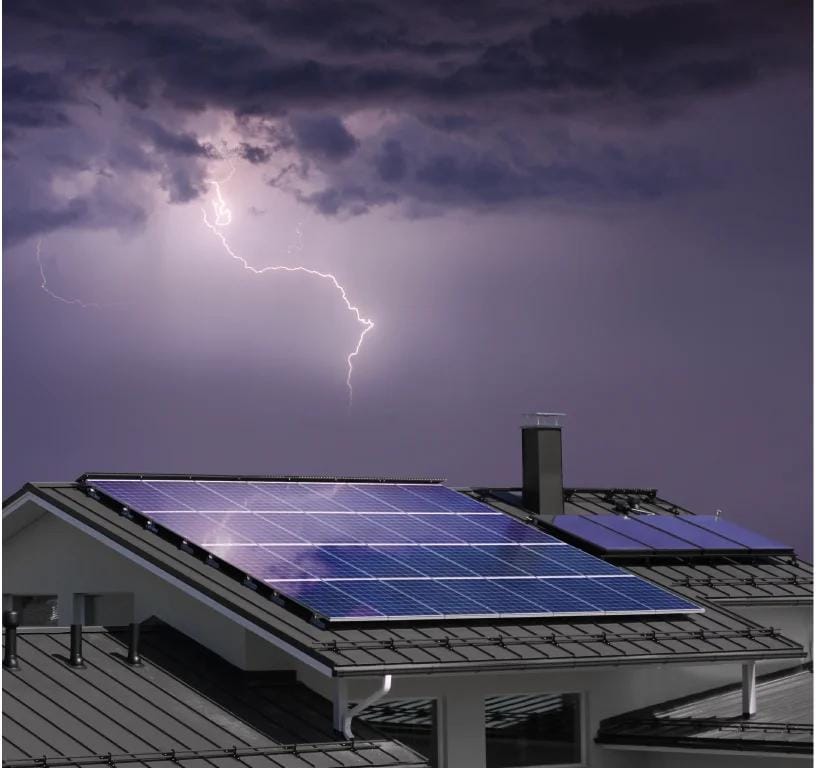
Lightning activity increases during monsoon season.
Poor grounding systems can expose solar installations to:
- Electrical surges
- Equipment damage
- Fire risks
Professional maintenance includes:
- Earthing inspection
- Surge protection testing
- Lightning arrestor checks
These safety measures are critical for system protection.
Common Solar Problems During Monsoon
Reduced Power Generation
Cloud cover naturally reduces sunlight availability.
However, dirty panels and faulty components can further decrease performance.
Water Damage
Water intrusion can damage:
- Inverters
- Connectors
- Junction boxes
- Batteries
Loose Mounting Structures
Strong winds may loosen:
- Bolts
- Frames
- Roof mounting systems
Regular inspections prevent structural failures.
Battery Performance Issues
For off-grid systems, batteries are particularly vulnerable during humid weather.
Common issues include:
- Terminal corrosion
- Reduced charging efficiency
- Moisture damage
Battery maintenance is essential before monsoon.
Solar Battery Maintenance Before Monsoon
If your system includes batteries, maintenance becomes even more important.
Checklist:
- Clean terminals
- Inspect corrosion
- Check electrolyte levels (if applicable)
- Verify charging performance
- Inspect battery housing
Proper battery care improves:
- Backup reliability
- Lifespan
- System performance
Benefits of Professional Solar Maintenance
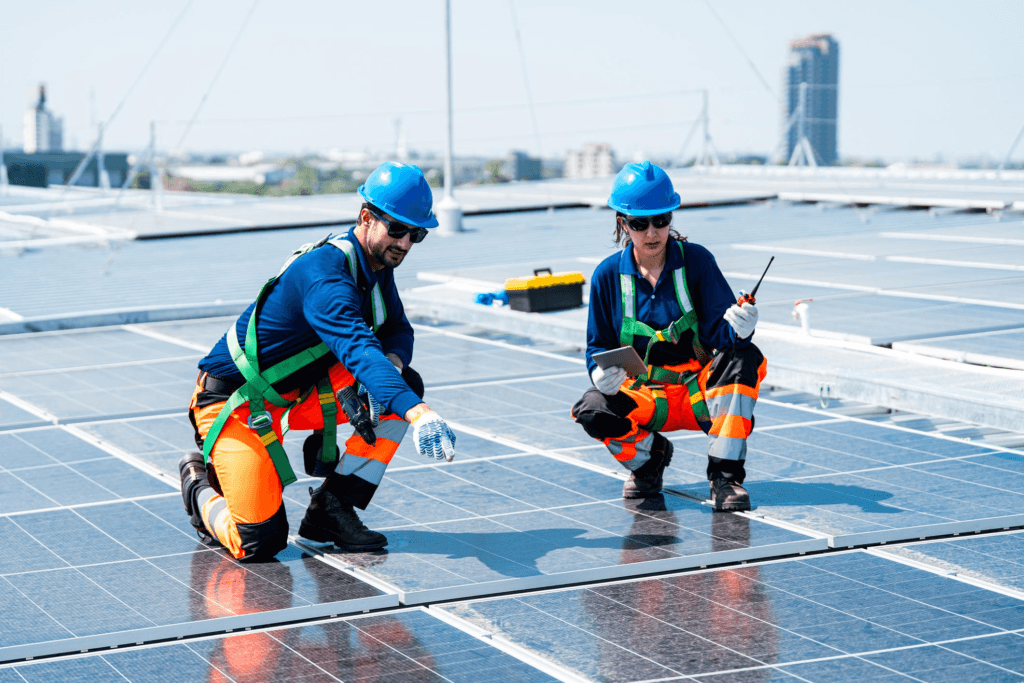
Many homeowners attempt basic cleaning themselves.
However, professional maintenance provides:
Complete System Inspection
Experts inspect:
- Panels
- Wiring
- Inverters
- Batteries
- Mounting systems
Early Fault Detection
Small problems can be identified before they become expensive failures.
Improved Energy Production
Well-maintained systems generate more electricity.
Longer Equipment Lifespan
Regular servicing reduces wear and extends system durability.
Better Return on Investment
A properly maintained solar system provides higher long-term savings.
Signs Your Solar System Needs Maintenance
You should schedule maintenance if you notice:
- Reduced electricity generation
- Inverter warning lights
- Frequent shutdowns
- Visible dirt buildup
- Loose cables
- Rusted structures
- Battery charging problems
- Water leakage near equipment
Ignoring these signs can lead to costly repairs later.
Solar Maintenance Checklist Before Monsoon
Solar Panels
✔ Clean panel surfaces
✔ Remove debris
✔ Inspect glass condition
✔ Check frame integrity
Wiring
✔ Inspect cable insulation
✔ Tighten loose connections
✔ Check connector seals
Inverter
✔ Clean ventilation areas
✔ Check error logs
✔ Verify operating performance
Battery
✔ Clean terminals
✔ Inspect charging status
✔ Check corrosion
Mounting Structure
✔ Tighten bolts
✔ Inspect rust
✔ Verify stability
Earthing System
✔ Test grounding
✔ Inspect lightning protection
✔ Check surge protection
How Often Should Solar Systems Be Maintained?
Recommended schedule:
Residential Systems
- Basic cleaning: Every 1–2 months
- Professional inspection: Every 6–12 months
Commercial Systems
- Inspection every 3–6 months
Before Monsoon
A complete maintenance service is highly recommended before every rainy season.
Solar Maintenance and Energy Savings
Many people focus only on installation costs but overlook maintenance.
Regular servicing can:
- Improve power generation
- Reduce downtime
- Prevent major repairs
- Increase equipment lifespan
Even small efficiency improvements can result in significant savings over the years.
Nepal’s Solar Future
Solar energy continues to gain momentum in Nepal.
Recent studies indicate substantial rooftop solar potential across major cities, while government initiatives and private investment are accelerating solar adoption nationwide.
Nepal’s long-term energy plans also aim to increase the contribution of solar energy within the national energy mix.
As solar investments grow, maintenance will become increasingly important for ensuring system reliability and performance.
Why Choose Multi Power Solution for Solar Maintenance?
Multi Power Solution provides professional solar maintenance services in Nepal.
Services include:
- Solar panel cleaning
- System inspection
- Inverter maintenance
- Battery servicing
- Wiring inspection
- Earthing checks
- Troubleshooting and repair
- Performance optimization
With experienced technicians and reliable support, Multi Power Solution helps ensure your solar system remains efficient, safe, and ready for monsoon conditions.
Conclusion
Monsoon season can significantly impact solar system performance if preventive maintenance is ignored.
Professional solar maintenance before monsoon helps:
- Improve efficiency
- Prevent water damage
- Protect inverters
- Extend equipment lifespan
- Reduce repair costs
- Improve energy generation
- Ensure electrical safety
Whether you own a residential rooftop solar system or a large commercial installation, pre-monsoon servicing is one of the smartest investments you can make to protect your solar asset.
Schedule your solar maintenance before the rainy season begins and keep your system performing at its best.
FAQs
FAQs
Why is solar maintenance important before monsoon?
It helps prevent water damage, improve efficiency, detect faults, and ensure safe operation during heavy rainfall.
Does rain clean solar panels?
Rain removes some dust but cannot eliminate stubborn dirt, bird droppings, or grease buildup.
How often should solar panels be cleaned in Nepal?
Generally every 1–2 months, depending on dust levels and location.
Can monsoon reduce solar panel performance?
Yes. Cloud cover, moisture, dirt accumulation, and system faults can reduce energy generation.
Is inverter maintenance necessary before monsoon?
Yes. Inverters are sensitive to moisture and should be inspected before rainy seasons.
What is included in professional solar maintenance?
Panel cleaning, wiring inspection, inverter checks, battery servicing, earthing verification, and performance testing.